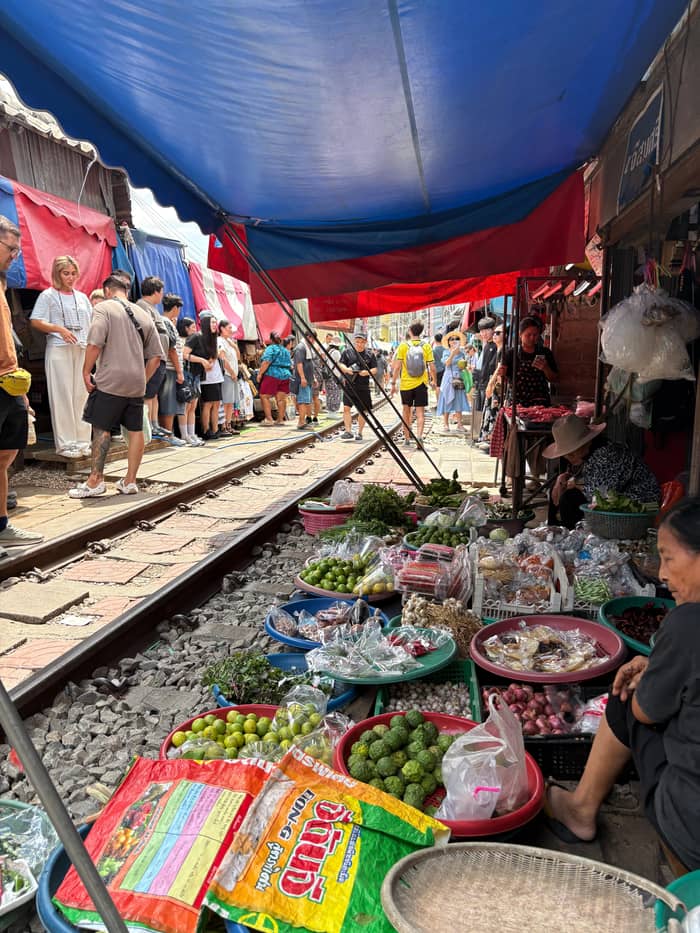
Best fit
The photographer
Chasing the train
- PlanChoose one arrival
- Time1 to 2 hours
- Best seasonNovember to February
Pick-for-me guide
Two questions, one day
Say what you want from the market and how you like to travel, and a day appears with its starting price.
Suited to you
from $18
7 to 7.5 hours with a longtail boat, a river boat and a train of 30 minutes.
Suited to you
from $45
7 hours with pickup included and the railway market visited first.
Suited to you
from $84
6 hours with 2 hours at the market; the listing says it is not a guided tour.
A market on a working rail line draws crowds for a few minutes at a time. Here is what it is, how long it deserves, and who gets the most from the trip.
Editorial team, maeklongrailwaymarket.click · Updated November 12, 2026 · Read in 6 min
Essentials
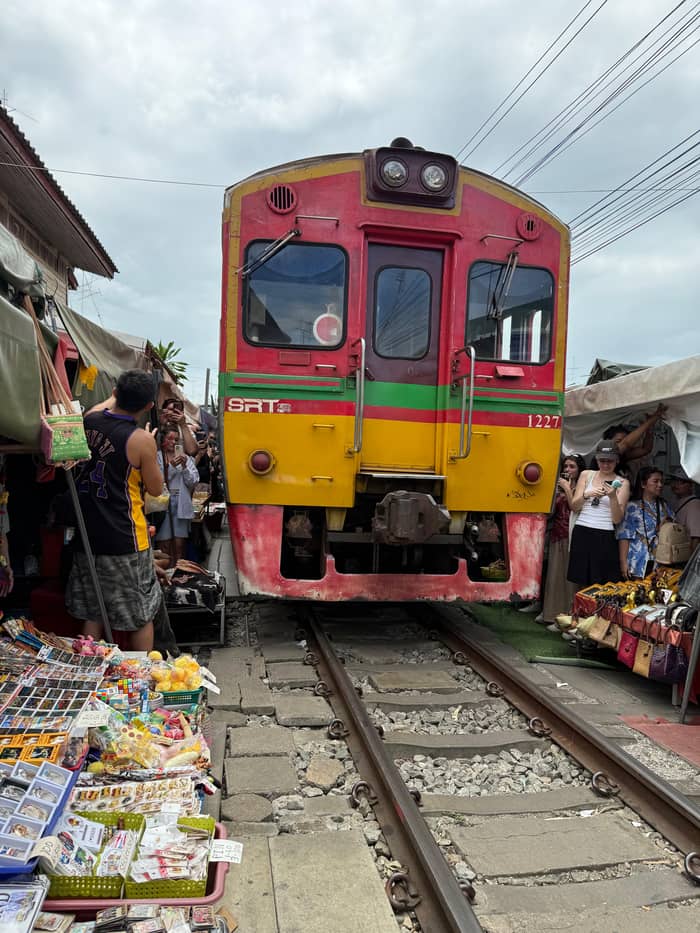
The Maeklong railway market is worth it if you want something that is unlike a normal market, and it is worth less if you want a relaxed lunch or a long shopping trip. What draws travellers is the train. The stalls are set up on working tracks, and the sight of a train passing through the goods is the reason people come. The rest of the market, the fruit, the dried fish and the chatter, is a bonus that most people enjoy.
It suits travellers who like photographs, who enjoy a bit of controlled chaos, and who are happy to build a day around one or two train times. The timetable gives only 4 arrivals each day, so the visit has a shape.4 It suits families with older children, couples and solo travellers, and it works on a short trip, because the market itself needs only an hour or two.
It suits you less if you hate crowds, if you are travelling with a toddler in a buggy, or if you cannot stand in the heat. It is also not a place to linger over a long meal. TAT describes a market of fresh and dried food, including seafood, rather than a row of restaurants.1 That honest framing is the basis of the rest of this page.
Side by side
| Day | Rating | Reviews | Time at market |
|---|---|---|---|
| Sold here | 4.7 | 10,745 | Not stated |
| Train-first day | 4.8 | 9,626 | 1 hour |
| Bus of 25 | 4.5 | 28,796 | Not stated |
| German guide | 4.5 | 11,015 | Not stated |
| With Amphawa | 4.3 | 725 | 1.5 hours |
| With Dragon Temple | 4.6 | 1,405 | Not stated |
| Private car | 4.8 | 46 | 2 hours |
Ratings and review counts as each listing shows them; they rate the whole day, not the railway market alone.
Beside the Maeklong Railway Station stands the market TAT calls Talat Rom Hup, where fresh and dried food and seafood are sold.1 The Ministry of Interior said in April 2018 that the town had lived with it for 60 to 70 years, and put daily visitors at about 3,000.2 So this is a working market that tourists have joined, not a theme park built for them.
The same statement was a reply to criticism of the food. The spokesperson listed the goods as fresh produce plus dry goods sold in bags, said no cooked food was on sale, and added that fresh items must be washed and cooked at home.6,7 The municipality and the train station cleaned the market twice a week, while vendors cleaned their own area every day.8 Use it to look at produce and buy ingredients, and have your cooked meals elsewhere.
TAT also reported what the station master saw: most European tourists came to take photos of the market, while Asian and Chinese tourists loved to buy seasonal fruits.9 That is a useful picture of the two reasons to go. If you want the photographs, plan around a train. If you want the fruit, the stalls are the place, and the vendors will sell to anyone who stops.
Time at the tracks
Time at the railway market as each listing states it; the coach listing that gives 105 minutes is not drawn because it is stated in minutes.
The listings give the clearest evidence of how long a visit lasts. One train-first day allows 1 hour at the railway market, and the Amphawa day allows 1.5 hours. The private car leaves 2 hours there, while a private day with the floating market leaves 1 hour. One coach listing says 105 minutes at the railway market, with a food market visit and a guided tour.
That range, from 1 hour to 2 hours, matches the market well. One train arrival, the pause beside it and a walk through the stalls fit comfortably into it. If you stay for a second arrival you may gain a second photograph, but the stalls themselves rarely change. A train every few hours is the rhythm of the place, and it rewards patience only a little.
If time is short, take the shorter slot and spend the saved hour somewhere else. If you are a photographer, take the longer one and choose your arrival in advance with the train times page. The point is that the market does not need a whole day. The day tours spend most of their hours on the road and on the floating market, and the railway market is the part that is fixed to a timetable.
Who it suits
Best fit
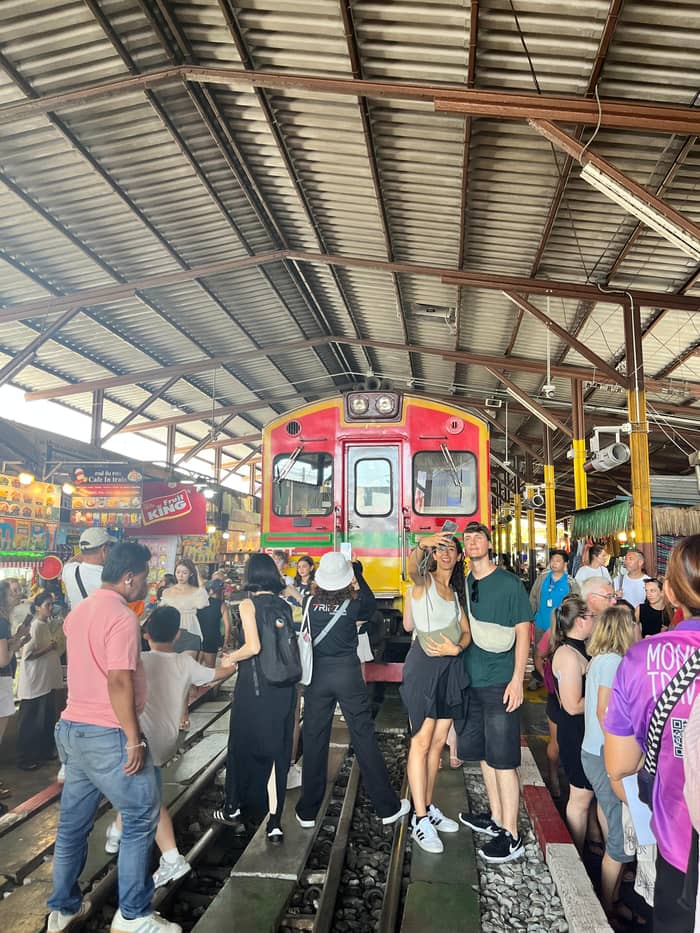
Chasing the train
Good fit
With older children
Weaker fit
Wanting a big meal
The ratings of the tours that include the market are high, and the sample sizes are large. Start with the day sold here, which has 10,745 reviews and a 4.7 average. The train-first day holds 4.8 across 9,626 reviews, and a coach day scores 4.5 from 28,796. The German-guided day scores 4.5 from 11,015.
These are ratings of whole days, which include the coach, the guide and the floating market, so they are not a verdict on the railway market alone. For the Amphawa day, the listing gives its own breakdown: guide 4.5, transportation 4.6 and value for money 4.3, from 725 reviews averaging 4.3. A Dragon Temple day has guide 4.5, transportation 4.7 and value for money 4.6, from 1,405 reviews averaging 4.6.
What can we say about Maeklong railway market reviews as a whole? That the tours around it are rated well by tens of thousands of travellers, and that each listing scores a little differently from the next. Read the newest comments on the listing you plan to book, because they describe the guide and the timing, and those are the things that change from week to week.
If you decide to go
Type your party size and set the shared days side by side.
Look at 4 options
Type your party size and set the shared days side by side.
≈
View≈
View≈
View≈
ViewCurrency conversion uses the ECB reference rate on GetYourGuide from-prices. The exact price is displayed when you book.
A realistic visit
On arrival
Stalls of fruit and dried food sit beside the working rails.1
Before the train
Arrivals are spread between 08:30 and 17:40 each day.4
The train
The pause beside the train lasts 20 to 60 minutes depending on the arrival.5
After it leaves
Fresh and dried food, with no cooked food in the 2018 account.6,7
Time on site
Listings allow 1 hour, 1.5 hours or 2 hours at the market.
Leaving
The day sold here returns by coach for 1.5 hours.
The market is outdoors, so the weather shapes the visit. TAT says the months from November to February are the best time to travel for tourists, who can enjoy a respite from the usual tropical heat.3 For Bangkok in the cool season it gives typical temperatures between 18 and 32 degrees Celsius.10 Mornings in those months are the kindest for standing on gravel beside the tracks.
The hot months are harder. In Upper Thailand, says the Thai Meteorological Department, April brings the fiercest heat of the year.11 September, it says, brings the most abundant monthly rainfall of the year to most areas.12 A market on open tracks is still possible in the rain, but awnings, wet gravel and crowds make it harder, so carry a light rain cover in the wet months.
Our own climate chart on the home page draws on the NOAA record of the Bangkok station and the Kanchanaburi station, which are the nearest with long records. Use it for temperature and rain by month, and treat the official TAT and TMD statements as the guide to the seasons. If you can choose, a cool-season morning arrival gives the best balance of comfort and light.
Video
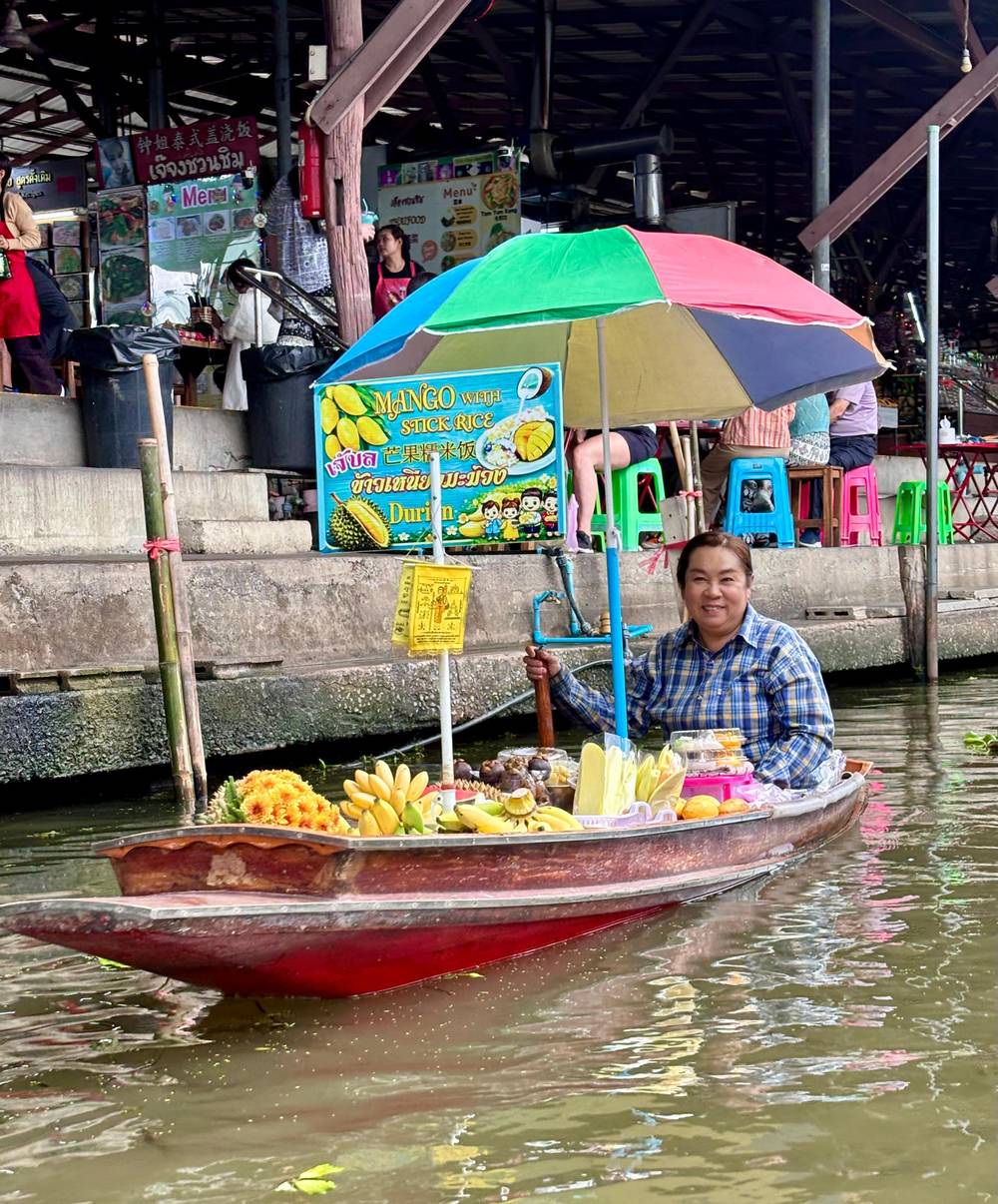
WorldTravelflix on YouTube · Your tap on play is what loads the video.
Most European tourists would come to take photos of this unique market, while Asian and Chinese tourists would also love to buy seasonal fruits.
If you go
Some travellers read that the Maeklong railway market closed at some point and wonder if it still runs. We found no official report of a closure, and the market follows the trains rather than a shop schedule. What has changed in the past is the train service itself. The State Railway announced on 11 June 2020 that it would resume interprovincial services, and the Mae Klong to Ban Laem line was on the list with six local car trains.13
That history is a reminder that a market built on a rail line depends on the line. The current timetable shows 4 arrivals and 4 departures at Mae Klong, and the railway invites passengers to confirm times with the Station Master or by phone on 1690.14,15 If you are booking a tour, the guide will know about any change, and the listing allows free cancellation up to 24 hours before.
There is one more thing to keep in mind. One start of the shared day sold here, at 07:00 AM, runs without the market train. That is not a closure, but it changes what you see. If the train matters to you, choose a departure that includes it, and ask the operator on the day whether the timings have shifted.
FAQ
It suits travellers who want the train passing through stalls and who can spare 1 to 2 hours; it is a poor choice for a long meal.
Listings give the railway market 1 hour, 1.5 hours or 2 hours, depending on the day.
TAT calls those months the best time to travel, with respite from the usual tropical heat.3
In 2018 the Ministry of Interior put visitors at about 3,000 a day.2
The listing leaves the ride out only on its 07:00 AM start, so check which start you book.
Sources
Planning a Maeklong railway market day? Ask a real person here.